
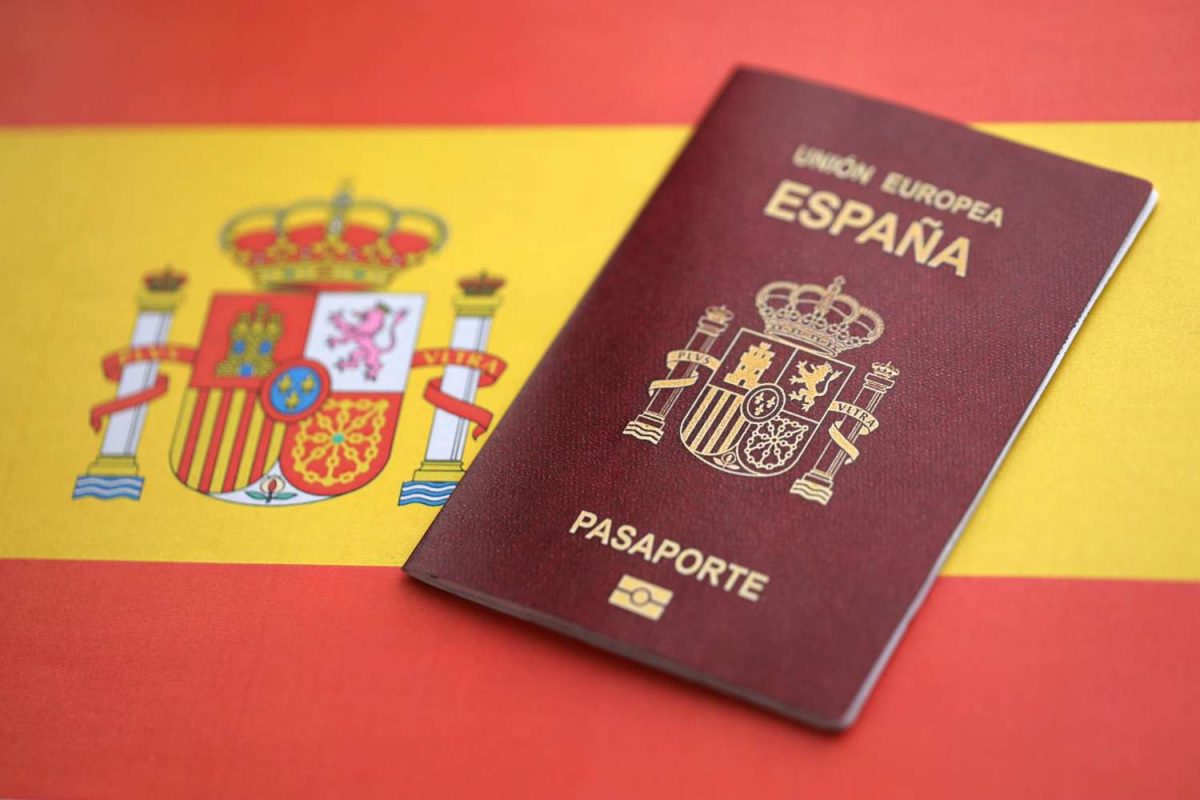
The obtaining Spanish nationality should be the ultimate goal of foreigners who want to settle permanently in the country. Process Spanish nationality brings a series of long-term benefits, thus avoiding cumbersome procedures such as renewal of residence permit. Of course, processing Spanish nationality involves a long and complex process and it is best to have the advice of an expert like those you can find at Escalante & Pérez Lawyers.
Why apply for Spanish nationality?
Why should you apply for Spanish nationality if you want to settle permanently in the country? Many foreigners think it's best to stay with the residence permit, since processing nationality is a long, complex process with certain economic costsHowever, our advice is that, as soon as you meet the requirements, you begin the process of obtaining citizenship.
Spanish nationality not only provides rights and obligations as a citizen, but also opens the doors to job and social opportunities within the country and even in the European Union and third countries. Therefore, it is very important to know every aspect of the process and ensure compliance with all requirements. Unlike the residence permit, which is processed at the Ministry of the Interior, Spanish nationality is granted by the Ministry of Justice.

The steps to process Spanish nationality
Application path
The first step is to determine the application method for nationality that will apply in your case. There are four different modalities and each one has specific requirements:
- By residence. It applies to foreigners who have legally resided in Spain for a specific period of time. Generally, this period is 10 years, although it is reduced for citizens of Latin American countries (2 years).
- By marriageIf you have married a Spanish citizen, you can apply for Spanish nationality after having lived in Spain for at least one year since the marriage.
- By choiceThis procedure is intended for those who can claim nationality based on family ties to a Spanish citizen.
- By naturalness. Generally, it refers to people born in Spain to foreign parents, under certain conditions. It is also often applied to prominent figures such as writers or soccer players.
Review the conditions for processing nationality
Each modality has specific conditions that must be met to begin the process. Some of the general aspects include:
- Legal residence in SpainIt's essential to prove that you've legally resided in the country for the required period of time based on your situation. For example, 10 years, two years, or one year, as appropriate.
- Social integrationIt's important to verify that you have sufficient knowledge of the Spanish language and culture, which is assessed through official exams.
- Criminal recordYou must not have a criminal record in Spain or your country of origin. The National Police process your criminal record, although it is not necessary to provide documentation; simply give your consent for the authorities to verify the relevant information. In the case of a criminal record certificate from your country of origin, the document is processed at the corresponding consulate, and each country has its own requirements and procedures.
Gather the necessary documentation
Once you have verified that you comply with all conditions and requirements, the next step is to gather the documentation necessary. This process can be long and requires attention to detail. Therefore, it is best to have the advice from an expert in the fieldSome of the documents you need to provide are:
- Passport and residence cardProof of your identity and immigration status in Spain.
- Certificate of registrationThis document certifies your residency in Spain and can be obtained from your local town hall.
- Criminal record certificatesThey are obtained from the National Police and the consulate in the country of origin, as explained above.
- Documentation proving the social integrationCertificates for Spanish language and culture exams are included here.
Remember that each modality may require specific documents, so it's essential to check the list of conditions provided by the Ministry of Justice or consult with a lawyer who is an expert in the field to make sure you haven't missed anything.
Knowledge and language exams to process Spanish nationality
As part of the documentation that you must provide to start the application are the Spanish language and knowledge examsThese exams, for which you must pay a fee, are mandatory for all foreigners, except for the Spanish language exam, which does not apply to citizens of the Iberian Community. You will also need to choose a date to be able to show up for the evidence relevant and this is done directly on the website of the Cervantes Institute, although the exam is in person.
In this sense, the Cervantes Institute enables academies, schools, etc.; in each Autonomous Community to be able to take the corresponding tests:
- Spanish language exam. Assesses the ability to communicate effectively in Spanish.
- Cultural and constitutional knowledge testHere, knowledge of the history, culture, and laws of Spain is examined.

In both cases, the most advisable thing prepare for tests Because they're crucial for your application. For the cultural knowledge exam, you can download an official study guide, and there are even mobile apps to help you with this.
How to apply for Spanish nationality?
Submission of the application
Once you have all the documentation ready, the next step is formally submit your applicationYou can apply in person or online:
- Online applicationThis application can be submitted by accessing the Ministry of Justice website. You will need the corresponding certificate and electronic signature to complete this process.
- In-person applicationTo begin the process in person, it's essential to make an appointment at your local Civil Registry or at the registry of your regional government office. Keep in mind that the application process isn't the same in all Autonomous Communities, so it's best to check where and how to apply where you live.
How long does the process take?
After submitting the application, the process begins waiting period for resolution. The time can vary considerably, depending on the workload of the Ministry of Justice or the complexity of your case and is usually placed between six months and the two years.
It is essential to make a tracking your request through the Ministry of Justice website. To do so, you will need the file number which is provided once the procedure has started. If the request is made via telematics, you will receive the number immediately; however, if it was done in person, the file number may take several weeks to generate and is necessary call by phone to order itIt is important to monitor the status of your procedure to check whether or not the authorities are doing anything to you. requestFor example, your application may be incomplete and you may need to provide additional documentation.
What happens when the application is approved?
In case the request is approve, you can verify it directly on the Ministry of Justice website. However, this is not a supporting document for the next part of the processYou will have to wait to receive the official resolution at your homeWith this document you can make the oath of nationality at the Civil Registry of the city where you live, for which you also need to make an appointment. With this act, the foreigner formally becomes a Spanish citizen.
Once the nationality oath is taken, you will receive the Spanish certificate which grants you full rights and obligations as a citizen of the country. You will also receive the certificate at your home and it does not mark the end of the process, as it concludes with the processing of the DNIThe final step is to make an appointment with the National Police to obtain a Spanish ID. To do so, you must present, among other things, the Spanish certificate that the Civil Registry sends to your home, as well as pay the corresponding fees. rates. It is essential to do this last part of the process in the times dictated by the resolution.










 EN
EN  ES
ES